An article in Polish has been published based on this interview From Biogas to Biomethane—What Can Poland Learn from Finland? – Agronomist 30.9.2026 agronomist.pl on an online platform, written by Anna Czasak, who interviewed Jani Kangasaho (JK) from Biovoima.
Poland has large amount of organic feedstock, experience in biogas production, and access to the technology. However, the development of the biomethane market is still hampered by the lack of stable regulatory conditions that would allow investors to build projects based on a predictable, long-term revenue model. The interview discusses the cost of transitioning from agricultural biogas production to biomethane production and what Poland could learn from Finland; The answers to Agronomist’s questions come from Jani Kangasaho, Sales Director at Biovoiman.
1. How would you assess the current stage of development of the biomethane market in Poland?
JK: From our perspective, Poland is at a very interesting stage in the development of its market. The country already has significant experience in biogas production, and its feedstock potential—particularly from agriculture and the food industry—is among the largest in Europe. The next step is to move from using biogas primarily for combined heat and power generation toward biomethane production on a larger scale.
For this to happen, the next important step is to translate the existing regulatory framework and support programs into concrete investment decisions. Poland has introduced several mechanisms to support the development of biomethane, and investor interest is significant, but many projects are still awaiting financing decisions before they can move forward. The technology is mature and proven; the market now needs more predictability in the implementation of support systems so that projects can secure financing and move into the construction phase.
2. What technical and financial requirements must an existing biogas plant meet in order to be converted into a biomethane production facility?
JK: The three most important factors are stable biogas production, sufficient and reliable availability of raw materials, and an effective sales channel for biomethane. From a technical perspective, it is necessary to analyze the volume and composition of raw biogas—including methane content, hydrogen sulfide, and other impurities—as well as the overall stability of the digestion process.
Location is also important. Access to the gas grid is one option, but not the only one. Biomethane can also be compressed or liquefied and transported to customers. A well-functioning biogas plant that produces a steady supply of gas is often an excellent starting point, as an upgrading unit can then be added as the next phase in the plant’s development.
3. How much would a change like this cost, and what scale would it require?
JK: The size of the investment depends significantly on the facility's capacity and the existing infrastructure.
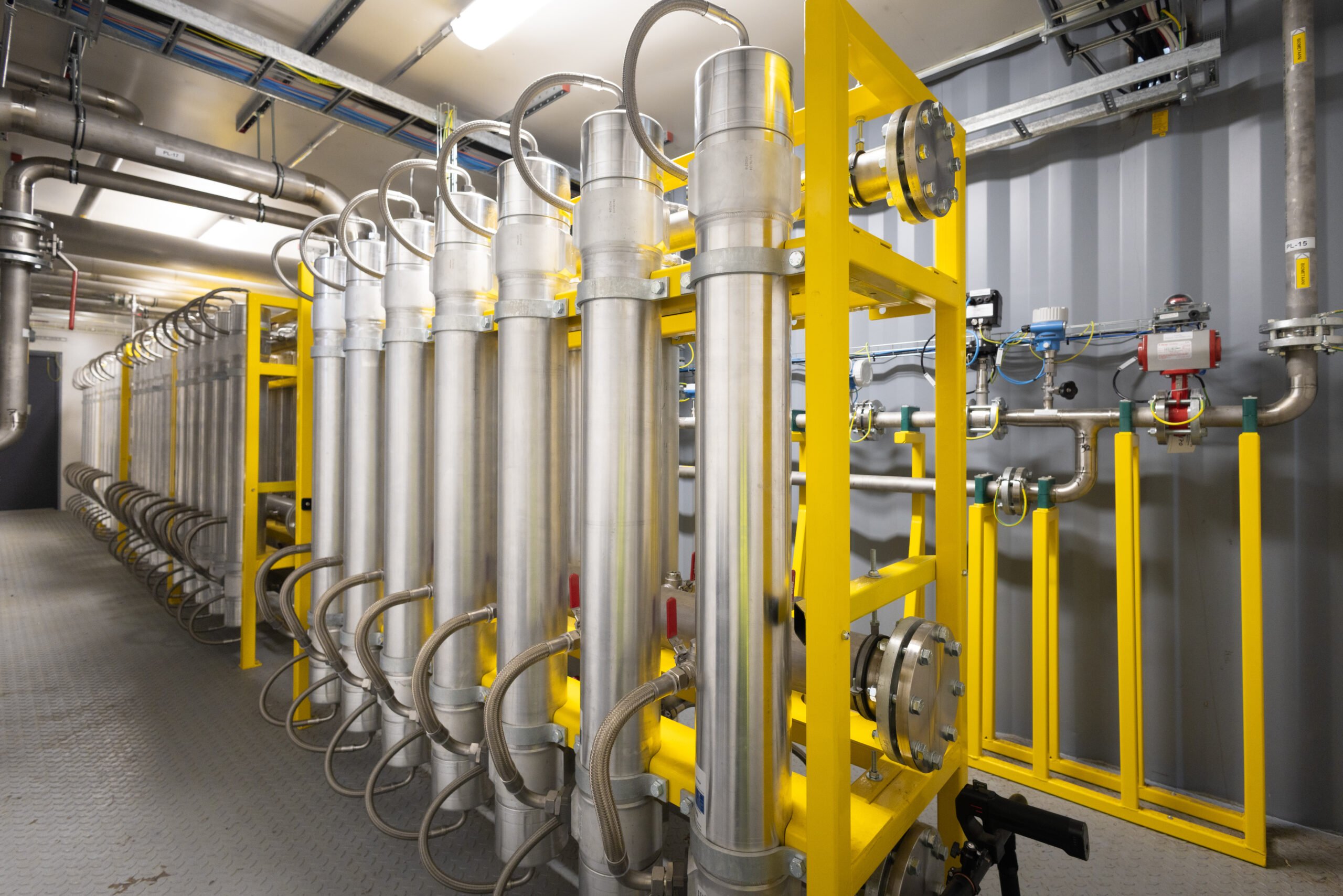
As a general guideline, a biomethane upgrading solution, including the necessary ancillary equipment, may require an investment of approximately 1.5 to 4 million euros. Grid connection solutions, pressurization, refueling stations, or BioLNG production can increase the total investment.
There is no single economically viable minimum capacity. As a general rule, projects become particularly attractive at production levels of approximately 300–500 Nm³/h of raw biogas and above, although even smaller plants can be economically attractive if they have a low-cost feedstock, high utilization rates, and a strong biomethane purchase model.
For this reason, we recommend evaluating each project on a case-by-case basis rather than applying a single, general minimum capacity requirement.
4. How does Poland compare to Finland, and what could Poland learn from the Finnish market?
JK: Finland began developing its biomethane market earlier, which is why it has more experience with both the technology and various biomethane business models.
One important lesson from Finland is that biomethane should not be viewed merely as a new way to produce energy. It is also a renewable fuel and an important part of the circular economy. The growth of biomethane use in transportation has been significant in Finland, as has the opportunity to create various business models: grid injection, transportation fuel, and direct deliveries to industrial customers.
However, Poland does not need to copy Finland’s model. Poland has a significantly larger agricultural sector and, therefore, the potential to develop biomethane production on a much larger scale. What Poland can learn from Finland’s experience is the importance of predictable regulation, the integration of proven technologies, and the creation of long-term demand for renewable gas.
5. Biogas or biomethane—which is more profitable for farmers?
JK: There is no single answer that would work for every situation.
Combined heat and power generation can remain a very good solution if both electricity and heat can be utilized efficiently. However, if a significant portion of the heat cannot be put to productive use, upgrading biogas into biomethane may become an increasingly attractive option.
Before making a decision, the owner should analyze electricity revenue, heat utilization and value, the selling price of biomethane, the distance to the gas grid or end customer, the plant’s capacity, raw material costs, and future investment needs.
Biomethane can also open the door to entirely new customer groups, including the transportation sector, industry, and businesses looking to reduce their carbon footprint.
6. What kind of investor interest do you see in Poland?
JK: Ever since Biovoima became active in the Polish market, we have seen a clear increase in interest in biomethane. We’re receiving inquiries about both new biomethane plants and converting existing biogas plants to produce biomethane. Owners of existing plants are increasingly evaluating whether upgrading biogas to biomethane could offer a more attractive long-term business model than simply continuing to generate electricity.
At the same time, we are seeing growing interest in larger agricultural and industrial projects in which biomethane production is planned from the very beginning.
We believe this segment has the potential to become one of the main drivers of the Polish biomethane market in the coming years. We currently have several projects in Poland at various stages, ranging from feasibility studies and budget proposals to commercial negotiations that have progressed further.
7. What else would you highlight?
JK: One important point is that Poland isn’t starting from scratch. It already has many operational biogas plants, a very large agricultural sector, a strong food industry, and significant raw material potential.
Biomethane production technology is mature and commercially available. Therefore, the key question today is no longer whether Poland can produce biomethane, but how quickly the country can create the conditions necessary to develop these investments on a large scale.
From an investor's perspective, regulatory predictability, long-term opportunities to purchase biomethane, and the bankability of projects are crucial.
If these conditions are met, we believe that Poland has all the prerequisites to become one of Europe’s most important biomethane markets.
More information on this topic:
Jani Kangasaho | Sales Director, Partner
jani.kangasaho@biovoima.fi | +358 50 468 7907