Biogas has been around for a few years now and many people have questions and prejudices about it. We decided to collect some of the questions we have heard over the years and answer them as best we can.
Since no list is perfect and you may still have a question that you are wondering about that has not been answered, you can. send us a message - we'll give you the answer.
”What happens to biogas if it leaks?”
Biogas is mainly a mixture of methane and carbon dioxide. The methane rises into the atmosphere as a lighter form of air and the carbon dioxide mixes with the carbon dioxide already in the air. The leak is rarely dangerous, as methane needs a source of spark and a precise mixture with oxygen to ignite, but it does emit greenhouse gases and should therefore be searched for and stopped.
”What is the difference between biogas and biomethane?”
Biogas refers to the gas mixture produced in a biogas plant. The methane content of biogas usually ranges from 50 to 70 %, with the rest of the gas mixture consisting of carbon dioxide and small amounts of water, nitrogen and oxygen. Biomethane refers to biogas from which most of the non-methane gases have been removed. Such a gas typically has a methane content of 95-99 % methane, with the remainder being carbon dioxide and small amounts of other gases. Gas car drivers are familiar with biomethane as a fuel because the ”biogas” that is filled into cars is actually biomethane.
”Isn't biogas explosive?”
Methane in biogas is a flammable gas, but compared to the gasoline and diesel typically used as fuel, it has a relatively high auto-ignition temperature. Methane has a spontaneous combustion point of over 600°C compared to 260°C for petrol and 210°C for diesel. In addition, for methane to burn, it requires the correct mixing ratio of about 5-15 % to air.
”Does a biogas plant always look the same?”
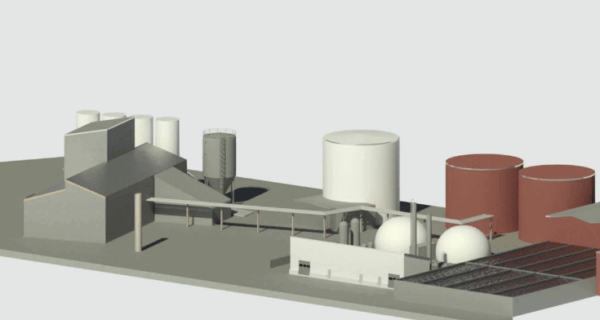
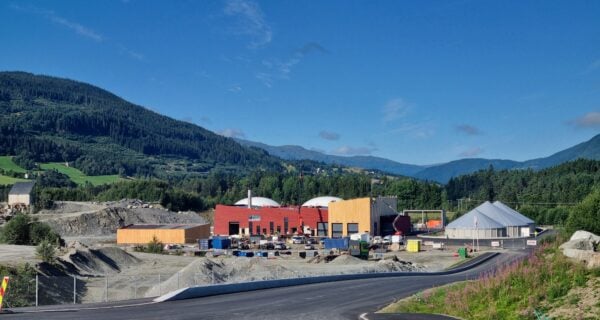
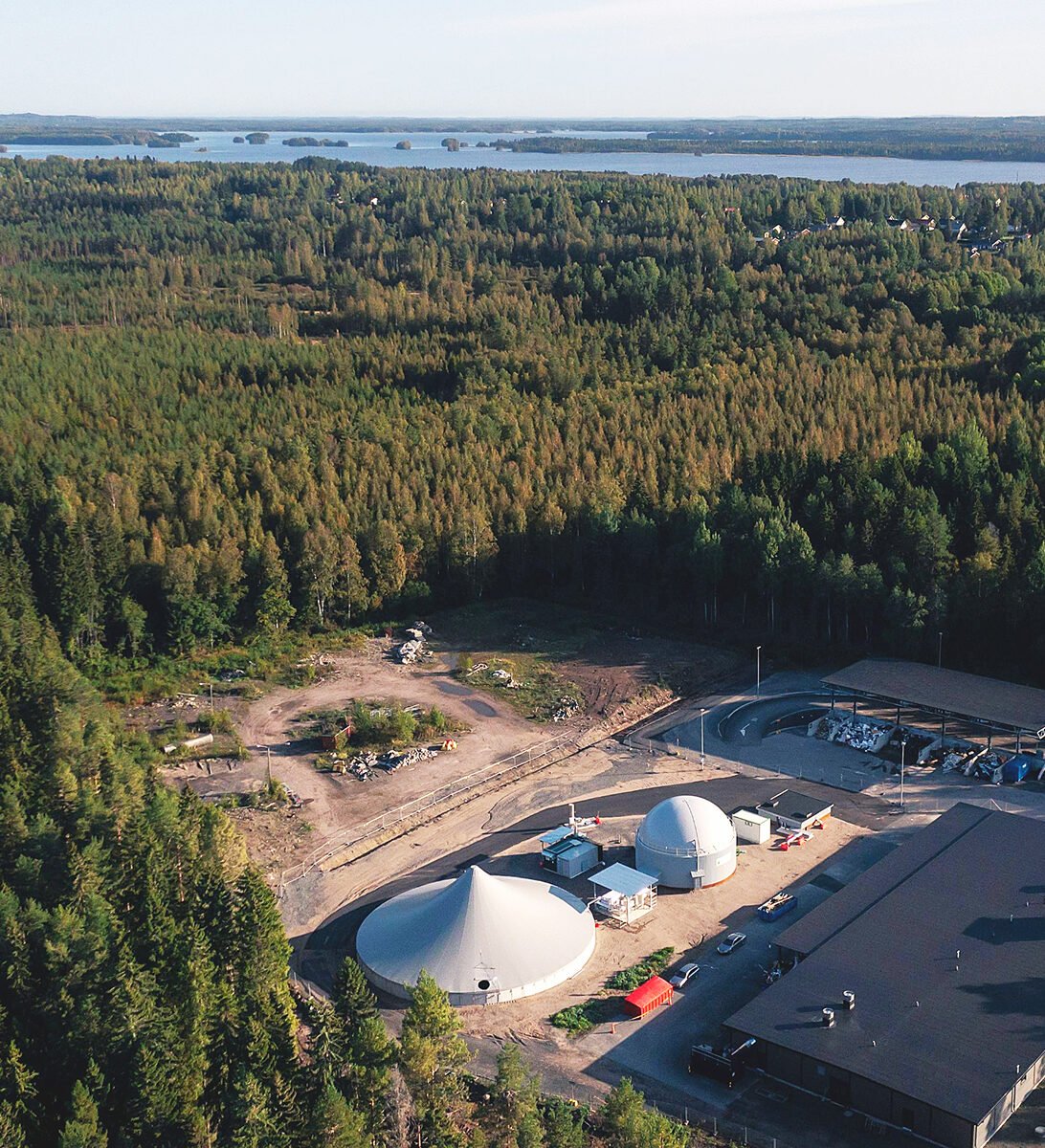
No, it is not. There are several types of biogas plants. The most common are circular wet digesters, often topped with a semi-circular membrane hood for gas storage. In addition, there are plug-flow plants with rectangular reactors, typically with a flat roof. The third type is dry digestion plants, which can be either garage or silo reactor type.
”Biogas production volumes are small and therefore insignificant!”
According to IEA Key World Energy Statistics 1.33 EJ of biogas was produced worldwide in 2018. That's about 370 TWh of energy, equivalent to Finland's total energy consumption in 2017. In Finland, around 1 TWh of biogas is produced annually.
”What happens to bacteria in a biogas plant?”
The quality of the final product of the biogas plant is regulated by the Fertiliser Preparation Act and supervised by the Finnish Food Authority if the final product is used commercially. The law requires the hygienisation of the material used in the biogas plant, which must be carried out either by heating all input material to 70°C for one hour, or by validating an alternative method.. Repeated tests during validation confirm that the harmful bacteria in the final product are dead and salmonella is absent.
”Can I digest whole animals?”
In principle, yes, but in Finland the necessary pre-treatments are governed by the By-products Regulation, which is supervised by the Finnish Food Authority. Secondary product regulation says that Category 1 products - such as whole cattle - cannot be digested, while Category 2 products - such as whole pigs - can be digested, provided the material is crushed and pressure sterilised during digestion.
”In the Nordic countries, it is not worth considering a biogas plant on a farm, it is not worth it anyway.”
It is true that for the average size of Finnish farms, it is often challenging to make a biogas plant profitable. However, the largest untapped potential is in large farms and especially in farm associations, where grass and manure are transported to a centralised biogas plant, and from there dry and liquid fertiliser separated from the processing residue, as well as electricity, heat or vehicle fuel, are returned to the farms. Natural Resources Institute Finland (Luke) estimates Finland has a techno-economically viable biogas potential (not competing with food production) of over 10 TWh, of which current production is only about a tenth.
I hope that this blog post answered your questions and gave you another step closer to biogas and its production. If you still have questions, please feel free to contact us. send a message - we are happy to respond and produce new material. We hope you enjoyed the blog!
Make sure you receive our next blog directly to your inbox
Biogas flare and compressor station for Frevar KF in Fredrikstad, Norway
Biovoima will supply a safety solution, a biogas and biomethane injection system and a gas compressor station for Frevar KF's biogas plant in Fredrikstad, Norway. The solutions are required for both the existing l...
BIOupgrade gas upgrading unit commissioned at Nevel plant
The biogas processing unit for biovoima has been successfully commissioned and is working well at the Nevel biogas plant in Forssa. The unit has been in biomethane production for two weeks now, producing ...
Voss biomethane plant installations in the final stages
The Voss biomethane plant in Norway has reached the final stage of mechanical and electrical installations. Commissioning has started and the aim is to start the biogas process later this year. The plant is now ready for commissioning....